


Accidental Motivation
Embracing Fate & Finding Happiness
Written and Narrated by John Holsinger
Copyright 2024
Audio copyright 2024
All rights reserved
To all those who are on a journey to find happiness, this memoir is dedicated to you. May my experiences and insights provide a roadmap to help you understand your purpose and find true joy and fulfillment. May you find the courage to pursue your dreams and live life to the fullest, and may this memoir serve as a reminder that happiness is within reach for all of us.
Introduction
We’ve all heard the saying that life’s a journey with its share of expected and unexpected twists, and both play a role in shaping our reality, sometimes in the blink of an eye. Our day-to-day experiences mold us into who we are, but there are also those profound moments that forever change our life’s course.
My childhood was spent in the simplicity of a small Ohio town, flying kites and playing outdoors until sunset. At ten, I was thrust toward adulthood by circumstances that transformed me into the man of the household and sparked a lifelong quest for control of everything that I thought had the potential to cause disorder.
Entering adulthood, a job at IBM granted me early access to the unlimited possibilities presented by the Internet, allowing me to literally and figuratively grasp the timeless adage that knowledge is power. This digital gateway connected me to people and ideas across the globe, opening doors I never knew existed. Marriage and parenthood brought joy but also great challenges. As I navigated life and largely experienced success, I was ultimately forced to confront my disillusionment with the American Dream. I found myself pondering questions like: What is the purpose of life? Why am I unhappy? How can I find happiness?
How can one answer these questions, along with the question of whether we have any control?
My pursuit of answers led me to develop a life philosophy that the only reason to live is to be happy and to embrace the selfishness that is required to be so. Though my journey was often fraught with setbacks and trials, my philosophy of Selfish Determinism eventually became my guiding light, but it wasn’t until my “Accidental Motivation” forced me to fully embrace its principles that my transformation truly began from an unhappy, unfulfilled man to one who loves life and feels happy in a way I never thought possible.
Through the pages ahead you’ll journey with me, gaining insight into the resilience, pain, and courage that emerged from surviving a traumatic accident and gave me the strength to be curious and discover who I was. It’s a story that celebrates the power of growth and reminds us that even amidst life’s greatest challenges, we possess the capacity to triumph and find our own unique path to happiness.
Chapter I: A Runner’s Accident
Accidents happen. You just don’t let yourself believe they will happen to you.
A to ANNO.
Scott Birk, a prominent figure within Austin’s running community, stood as a seasoned and dedicated runner. His remarkable achievements included completing thirty-seven marathons, twenty-eight half marathons, and fifty-two 5Ks—twenty-two of which he accomplished in the year 2010 alone. Scott knew how to run, he ran fast, and he ran nimbly. He had the ability to skillfully navigate past slower runners, potholes, bicyclists, pedestrians, and vehicles. Despite his admission that training runs weren’t his favorite endeavor (a sentiment shared by many), his commitment to achieving results was undeniable. Scott consistently ran over fifty miles per week, accumulating thousands of miles over his lifetime. In short, he was one hell of an athlete.
During a training run in the summer of 2011, Scott attempted to cross a four-lane road but collided with a Dodge Durango. Tragically, he was pronounced dead at the scene shortly thereafter. According to the authorities, the driver of the vehicle held the right of way with a green light when Scott unexpectedly ran in front of the truck.
Seated at my desk in my home office on that fateful June 13th, I received a phone call from a close friend and neighbor. “Scott was hit by a car, and it sounds serious. He could have lost his life . . . but I’m not sure. Where? At the entrance to River Place. Unimaginable. When did you last see him? What are you going to do?” I found myself staring through the window, grappling with the weight of the news. Could he really be gone? Surely, he must still be alive . . . friends don’t just die, not like that. One moment on a training run, the next it’s all over. He was young, and from my perspective had his whole life ahead of him.
Questions about Scott’s situation inundated my thoughts but I had no answers. I also pondered, what if it were me?
As runners, we know the distances of the core segments of our routes. In my case, I knew the intersection of the accident was two miles from my home. The notion of heading to the accident scene fleetingly crossed my mind, yet what purpose would it serve? Scott was likely already en route to the hospital and visiting that intersection would only fuel my morbid curiosity. The thought was quickly dismissed. I needed to grapple with my own disbelief.
I picked up the phone and shared the news with my former wife and a couple of friends. “Have you heard about Scott? I can’t wrap my head around it. What happened? What exactly happened?” It felt as if I were trapped in the Twilight Zone, having the same conversation repeatedly. “How could this happen? Why did it happen? No, I’m as clueless as you are.”
The intersection where the accident occurred was known for previous automobile accidents. My thoughts painted a scenario of one car colliding with another, leading to an impact that could involve an aware and stoplight-respecting Scott on the sidelines. The likelihood of Scott, or anyone for that matter, being present at the precise moment of such an accident was almost inconceivable, but even more inconceivable was the notion of Scott running in front of an oncoming vehicle. And if something so random, so unthinkable happened to him . . .
For much of my life, I have been a recreational runner, training five to ten hours per week. I first met Scott at local social gatherings, yet our encounters were more frequent during training runs or post-race discussions. The route Scott took on the day of his tragic accident was one I had run countless times. In our hilly neighborhood, many endurance athletes (myself included) had to cross that very intersection to extend their run distance. Following the accident, everyone who had a connection with Scott, and fellow runners in a unique way, experienced a profound impact. The sorrow was undeniably painful, and my relationship with Scott intensified the grief. The fact that it happened to a runner, like me, shook the very core of my being. I have rarely run since then without thinking something like that could happen to me, on any given day, during any run.
Scott had no control over the car’s presence, the timing of the traffic lights, the driver’s actions, or any other aspect of the situation, including his presence at the precise moment of the tragedy. Given the opportunity, he would have undoubtedly made different choices—just as anyone would have. He could have opted to stretch on the sidewalk, chosen an alternate route, or taken a day of rest. The “could’ve” and “would’ve” scenarios loom large. I’m certain that Scott would have taken any action necessary to avoid the accident had he known he would be struck by a car and lose his life.
Hindsight often renders many things possible or seemingly foolish. In the moment, our thoughts appear logical to us, driven by our individual reasons for making specific choices. Had anything been different, the accident would never have happened. Scott likely considered various types of information—his running pace, the intersection’s speed limit, and his faith in others’ quick reaction times—leading him to the best decision within his understanding: attempting to cross the road. And then, in the blink of an eye, he was gone.
He is survived by his wife Carla and 3 children. Scott was an avid runner and well-known competitor. He was known for his devotion to his family and leadership in school and sports organizations, where he impacted many lives.
—Obituary for Scott M. Birk
My Life
One of the obituaries for Scott mentioned that he was born and raised in Wisconsin and attended Marquette University in Milwaukee. It noted, “Those who knew him will remember his warm and caring spirit.” His Midwestern roots resonated with me as that warmth seemed to infuse every interaction I had with Scott. The portrayal of his life by those who knew him left an impression on me. I recall hoping my obituary would speak highly of me upon my death but I feared it might be quite different.
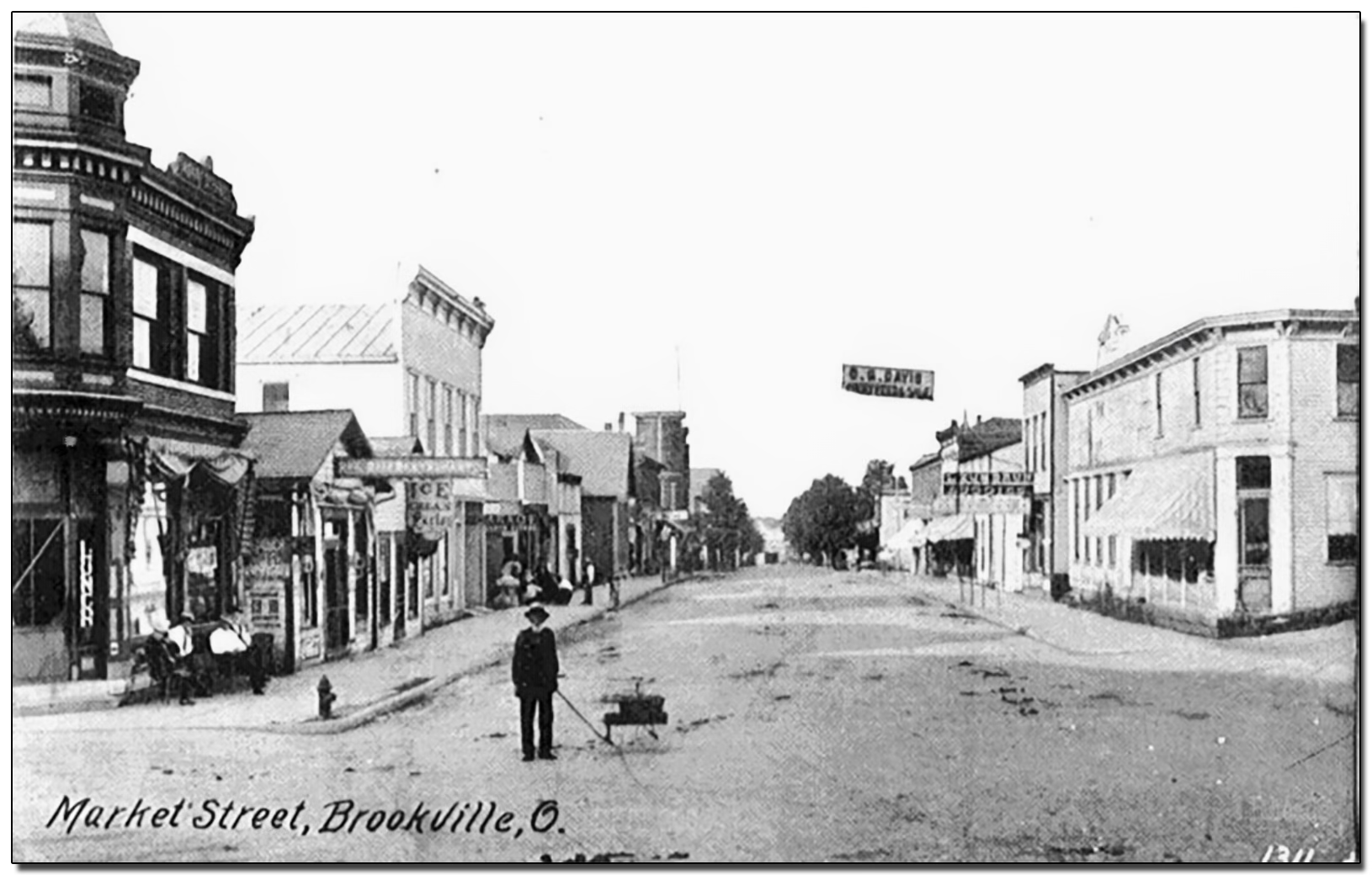
Being from the Midwest myself, the obituary reminded me of the rich context of my upbringing that I had seldom acknowledged. The mention of Scott’s hometown triggered thoughts of my own hometown. I entered the world in South Bend, Indiana, in 1963; within a year, my family moved to Brookville, Ohio. We lived a mere stone’s throw from my grandparents’ home, where my father grew up. It was also a short fifteen miles west of Dayton, my mother’s hometown. In my limited perspective, I thought everywhere and every town resembled late 1960s Brookville—a tight-knit community of around 3,200 people nestled amidst farmlands. Here, a homogenous group of modest-income, frugal, faith-centered Caucasians lived an unhurried life. It was a genuinely pleasant place to call home.
As an adult, I came to cherish being recognized as a Midwesterner. I embraced the archetype of a Midwesterner, characterized by inherent optimism, happiness, and a knack for putting smiles on the faces of both friends and strangers that we meet.
Growing up, there were guidelines for nurturing God-fearing children. My father instilled values of honesty, trustworthiness, and dedication. However, as I matured, I grappled with the contrast between who I aspired to be and the person I truly was: a lonely and unhappy child at times.
Although I achieved milestones as an adult that many value—marriage to a hometown girl, a successful career, and three wonderful children—at some point, I could no longer escape the question: Was I ever genuinely happy? My outward accomplishments aside, I lived with an underlying unease. While I cherished my children and their ability to bring joy into my life, many of my days as a husband and a father were rote and unfulfilling. I felt affection for my former wife, but eventually acknowledged that I hadn’t been in love with her for most of our marriage and that we had been staying married for our children’s sake.
Despite achieving success in high-pressure sales jobs, the sales environment was one I despised. The demands of each job, the relentless pressure to meet quotas, and the inherent dissatisfaction I felt created a suffocating sense of stress which was a constant strain that weighed heavily on me. Each day seemed like a struggle, as the excitement of hitting sales targets one quarter faded in the face of new expectations the next. The rewards of reaching milestones, like prestigious awards and fabulous trips, were quickly overshadowed by the perpetual question, “What have you done lately?”
What I didn't know then is that I had never had a job that provided the emotional and personal satisfaction I sought. This was because there was a fundamental misalignment between my values and the work I was engaged in. Even the management track, which I initially thought would be more rewarding, presented its own set of challenges—particularly the gamut of personnel management concerns that arose alongside newfound authority.
I had pushed all these feelings aside so that they were barely perceptible, but once they rose to the surface, brought on in part by Scott Birk’s death, my life began spiraling in ways I could not control. I began to question whether anyone truly has control.
Choices Made, Paths Taken
Throughout my upbringing, there were countless instances when I felt a lack of control: being told by my parents to do chores, not being picked for kickball, and experiencing a teenage breakup. As an adult, instances like a reckless driver on the freeway, a bar fight, or job loss due to a company division sale further underscored this sense of helplessness.
In the face of life’s uncertainties, we often strive to regain control in any way possible. However, as I attempted to pinpoint the first time I took control in my life, my recollections of childhood failed to provide definitive answers. Reflecting on those seemingly pivotal choices, it became evident that the people around me exerted a significant influence.
Eating ice cream whenever I had the chance or forgetting the dreaded chore of taking out the trash hardly constituted control. Even asking a girl out during my teenage years, which seemed like a display of authority, was short-lived if she declined. The notion of control appeared again with decisions like choosing a college, opting for engineering, or applying to the University of Cincinnati (UC). At eighteen, legally an adult, I could do anything I wanted. However, my reasons for applying to UC over other, arguably more prestigious institutions like Harvard, Yale, or Oxford made me question the extent of control I truly exercised.
Like many American high school students, going to college was a given for me. It began during my freshman year of high school as an escape from my small hometown and to pave the way for a brighter future. However, not everyone I attended high school with had the same opportunities.
One of my friends, Jeff Schwartz, had been accepted by three Ohio universities and was interested in attending, but his lower high school GPA, lack of scholarships, and lack of parental support left him uncertain about paying for college. In search of alternatives, he considered joining the US Military. Jeff knew that the US Air Force regularly conducted the ASVAB (Armed Services Vocational Aptitude Battery) admission test in Cincinnati, Ohio. Eager to move forward, one Saturday he took a Greyhound bus to Cincinnati and completed the test. After speaking with a few disinterested recruiters, Jeff returned to Dayton later that day. As he was walking to his car, he passed an open door and heard his nickname, “Hey, Red!” Startled, he looked around and noticed a US Marine Corps recruiter at a desk. The recruiter’s attempt to catch Jeff’s attention worked, leading Jeff to walk into the Marine Recruiting Office. The recruiter pointed to a poster depicting Marine recruits in training at boot camp and asked, “Think you can handle that?” With all the bravado he could muster, Jeff enthusiastically exclaimed, “Hell yes.” In less than an hour, he had signed the initial paperwork to join the Marine Corps. The Marines offered Jeff the structure, plan, and compensation he wanted, providing him with the best path forward after high school.
Jeff and I deliberated over this scenario and concluded that the US Marine Corps recruiter likely exploited the vulnerability of individuals in transitional moments. With Dayton and Cincinnati in close proximity, the recruiters were well aware of the ASVAB test dates. The recruiting office’s strategic proximity to the bus station and their knowledge of returning buses from Cincinnati meant that Jeff, among other Air Force candidates, was an accessible target. Jeff’s response was stirred by both the attention and the allure of the challenge.
Not everyone is interested in pursuing higher education after high school. Another friend, Ronnie Loughman, disliked the homework load of high school, making college an unattractive option for him. He held various jobs until a family member told him about an opening at a company that serviced truck and trailer tires in Dayton, Ohio. Ronnie applied and got the job; however, after a few unsatisfying years, he realized he didn’t want to be changing tires for the rest of his life. His exposure to truck drivers through his job led him to consider a new path. Becoming a truck driver offered better pay and the opportunity to travel. Ronnie dedicated himself to studying and practicing, ultimately passing his test for a commercial driver’s license (CDL) to operate tractor-trailers. Recognizing this as his best chance, he made the decision to pursue this opportunity.
Three of us—Jeff, Ronnie, and myself—shared similar childhood experiences. However, we chose drastically different paths shaped by our individual histories. Yet, how many of these paths were truly the result of free will?
Control
While few believe they possess absolute control over every aspect of their lives, many hold onto the notion that there comes a point when we take control over our destinies and decisions. I had no say in my parents meeting, my birth itself, or my genetic makeup. Post-birth, I had no influence over the language I learned or the socioeconomic status of my family. So, when did I gain control?
Among my circle of friends and colleagues, most feel that the first time they were in control over their lives was when they selected a post-secondary school. Many among them applied to varying numbers of universities and received acceptances from a subset of these institutions. Conversations about college often include statements like, “I chose to attend Vanderbilt.” However, when I inquire further by asking why they didn’t opt for Harvard, the response often takes the form of, “How could I have chosen Harvard? I wasn’t accepted!” This highlights a subtle distinction regarding choice—the unavailability of Harvard as an option meant it couldn’t be “chosen.” The illusion of “choice” is influenced by an array of countless factors.
Situations where individuals believe they exhibit control include:
· Refusing to eat.
· Skipping classes.
· Selecting a life partner.
· Picking a career path.
· Acquiring a vehicle.
· Accepting a job offer.
· Opting for a two-bedroom home priced at $160,000 over a five-bedroom home priced at $900,000.
These realms of presumed “control” revolve around three domains: the body, the mind, and the environment.
Controlling the body: You have the sensation of controlling your body when you move your arms and legs or run across a room. While you can make choices about what to eat to some extent, your body’s hunger drives you to eat. Yet, there are body movements that seem initially under your control, like blinking, yawning, shivering, breathing, scratching, and laughing. However, these actions can often be triggered by internal and external stimuli beyond your direct control. This raises questions about the extent of your control over your body.
Control of the Mind: The feeling of controlling your mind appears when you decide what to think about. However, your mood, for instance, can be influenced by external events or chemical imbalances, impacting feelings of happiness or sadness. Hormones like dopamine link to pleasure, serotonin relates to memory, and norepinephrine, like adrenaline, governs stress and anxiety. Motivation, while something you can encourage, is often driven by external factors like deadlines or rewards. Finally, decision-making, despite being conscious, is often shaped by past experiences, biases, and emotions. The same applies to memory recall, creativity, and maintaining focus.
Control of the environment. Controlling our environment is a nuanced concept. We can have some influence on our surroundings, but external factors like weather, natural disasters, and societal structures often challenge our perception of control. This misconception often arises from our ability to observe patterns and make predictions. When these predictions align closely with actual outcomes, it reinforces the illusion of control. For instance, I once believed I had control in my former marriage because I accurately predicted that helping with childcare, occasionally cooking, and maintaining the house would make my former wife happy. However, it became evident that I couldn’t control the fate of the relationship, as it was ultimately influenced by her independent feelings and decisions.
When something unexpected happens, the mind often engages in a process of cognitive recalibration to maintain a sense of control. It tries to make sense of the situation and does so by creating a narrative that aligns with the belief of having control. It tends to attribute outcomes to itself with bias, and it reframes unexpected events as temporary setbacks that, with enough willpower, can be overcome. Sometimes, the new reality is accompanied by an undeniable realization: maybe I am not in as much control as I thought.
Scott Birk likely believed he had control over his life’s choices. He applied to Marquette University, got accepted, pursued his studies, graduated, and even took up running. It's probable that he felt in command on the day of the accident, choosing to run along the neighborhood streets and deciding to cross FM 2222. Yet, in an instant, factors beyond his control dramatically altered his reality. This raises a pertinent question: How does one lose control when confronted with unforeseen circumstances?
The notion of control must be straightforward. Either we have it, or we don’t. However, many individuals believe and consciously accept the idea that control exists in varying degrees. They believe we have control over certain aspects like what we eat, our friends, our choice of life partners, or even the decision to read this book. Simultaneously, they accept a separate category where control lies in the hands of others, such as the notorious bumper-to-bumper traffic on Southern California’s 405 freeway or my decision to write this book. Lastly, there’s a third category which includes things that no one can control—physical laws like gravity, the rotation of the sun, or the weather. It’s common for people to believe they have control while not giving a second thought to instances when they do not.
Countless events happen around me all the time. However, my body’s senses can only capture a fraction of this reality, and my busy mind can only attend to a handful of these sensory inputs. As such, I cannot dismiss the idea that control may simply be a persistent illusion due to my limited, unique view of reality. Typically, we become aware of the lack of control when a sudden change occurs within our bodies, minds, or surroundings.
Do we only become aware of our lack of control when it leads to discomfort or harm? Consider this: when a joke triggers laughter, or a touching wedding moment brings tears to our eyes, we rarely dwell on the fact that these are also instances of losing control. It’s a different matter, though, when laughter leads to an embarrassing incident, like wetting one’s pants. Suddenly, the loss of control shifts from amusing to mortifying. Similarly, losing one’s temper in traffic evokes a different reaction compared to shedding tears at a wedding. It appears my attitude toward control is inconsistent, swayed by the context of the experience. Positive experiences make me overlook, even enjoy, the relinquishing of control. In contrast, negative situations often leave me upset, sometimes repulsed, followed by regret and resentment once the initial emotional storm passes. This introspection led me to an intriguing realization: my sense of control, or the lack thereof, never really changes. It’s driven by the fluctuating chemicals in my body, influencing my emotions. Logic suggests that to be truly in control, one must always be in control, but is that even possible for us as humans?
Building on this premise, if I am in control and then lose it, the cause must result from factors beyond my control. If I am truly in complete control, nothing should be able to trigger a loss of control. Therefore, I come to a compelling realization: if I have ever experienced a loss of control, it suggests that I never truly possessed control in the first place.
Living a life without control might seem frightening or even futile. However, if this is the truth of our existence, we are better off acknowledging that truth. Such awareness profoundly shapes us and grants context to comprehend the why and how of events, as well as highlights the significance of influence in our lives. This understanding relieves pressure, aids in avoiding negative influences when possible, and helps us recognize positive relationships and experiences that lead to a better, happier life.
The Year Before Scott’s Death
During 2010, I held a high-pressure position as the senior vice president of sales and marketing for a Germany-based company. The role required frequent travel across the US for internal and customer meetings. Moreover, global leadership events mandated international travel for at least a week, taking me away from my family. Balancing executive responsibilities and personal challenges made 2010 an exceptionally demanding year for me. Despite achieving professional success, I was deeply unhappy. After more than a decade of marriage, my former wife and I found ourselves growing distant and decided to seek relationship counseling. To reduce pressure and distractions, our therapist suggested various strategies, one of which was taking up writing. The writing task was open-ended and lacked a specific topic or focus; it was more of a diversion. However, if we found it helpful or therapeutic, that would be an added benefit. Perhaps the act of writing aimlessly would provide us with some valuable introspection.
One Saturday morning, while sipping my morning coffee, I decided to give it a try. Initially, I saw it as a mindless activity, unaware that my storyline would mirror the love and relationship challenges I was facing in real life. As I delved into writing, I found myself documenting my emotional voyage, uncovering previously unknown facets of my relationships, and answering my own questions.
Throughout my life, I have read numerous books, both science fiction and nonfiction. My fascination with science fiction began when I read A Wrinkle in Time by Madeleine L’Engle, published in 1962. The imaginative tales transported me to worlds where fantastical events took place, which resonated deeply with my desires. Science fiction presented exciting possibilities, often interwoven with advanced technology, alternate realities, and far-reaching parts of the universe. These stories expanded my mind and gave me a sense that anything was possible.
One notable science-based book was Stephen Hawking’s A Brief History of Time, published in 1988. The book, presenting modern physics in an accessible manner, fascinated me with its introduction to concepts like black holes. I was captivated by the idea that gravity in a black hole is so intense that nothing, not even light, can escape. This concept lingered in my mind for years. The notion that gravity could affect massless photons, despite their speed, intrigued me. My curiosity about these ideas led me to speculate: if the universe operates at the speed of light, then perhaps an object's mass determines its speed, giving rise to our perception of time. This line of thinking led me to imagine a universe without mass, possibly in another dimension, where time is experienced differently than in our own.
These thoughts gave birth to my manuscript, “No Time,” a story set in a time-free universe. The protagonists, Jax and Dagny Montgomery, a father-daughter science team, embark on an energy experiment gone awry. This experiment results in a cataclysmic explosion, tearing their universe apart and birthing a white hole that triggers the Big Bang in our universe.
Developing the “No Time” narrative required extensive research in physics, philosophy, and cause-and-effect relationships to craft a conceivable world-universe model. This endeavor was time-consuming and distracting, leading me down a path of self-discovery, and prompting me to explore profound questions about my own existence, control, and responsibility.
Accidental Motivation: The Book
Although I enjoyed developing my “No Time” story idea, my mind drifted toward the looming question of whether or not we have any control. I started working on a manuscript that developed into Accidental Motivation, a vehicle to untangle the sprawling question, “What aspects of my life can I truly control?” Although my engineering background equipped me with analytical skills, the nature of control required deeper philosophical scrutiny. Complex questions about the Big Bang, the tug-of-war between evolution and creationism, moral relativism, and causality in a four-dimensional universe came into play. A simple scientific viewpoint couldn’t resolve these intricacies thus when science fell short in offering answers, I delved into philosophy.
Additionally, my family life was falling apart and the ultimate question of who would be the first to break loomed large. I realized if I couldn’t find my own happiness, the odds of my actions, love, and presence creating happiness for others were not good. My personal worldview needed some significant adjustments before I could project it outward. To that extent, I felt a sense of control.
On a memorable evening, December 9, 2013, I found myself amidst a group of fifteen intellectual seekers, gathered in a secluded dining area at La Madeleine in Austin. It was the Austin Philosophy Discussion Group (APDG) Meetup group meeting entitled “Contemporary Philosophy, Analytic Philosophy.” They decided to present and discuss an overview of Analytic Philosophy, looking at three philosophers over three meetings: Gottlob Frege, Bertrand Russell, and Ludwig Wittgenstein. The meeting roster included a variety of keen minds. From my notes, attendees included Leonard Hough (host), Barbara, Hillary, Ronnie, Gary P., Bill Meacham (author and philosopher), Larry Yogman, Katherine (worked on a Frege paper in college), Philip Watts, Terry Ellis, Bene, Doshan, Guy Johnson, and Jack Hohengarten. For two hours, the group delved into the work of Frege who was instrumental in shaping modern logic and analytic philosophy. Captivated by the scope of ideas, I felt alive in a way I hadn’t in years. I made it a habit to jot down notes on my iPhone, using it as a repository for a plethora of concepts discussed, which I referred to frequently and as I began to open my mind and look at my life and the world differently.
That night was a significant moment for me. My curiosity grew and I became eager to learn more. Web browsing turned into a marathon of academic discovery as I waded through an ocean of philosophies, theories, and viewpoints. Even as questions remained unresolved, new ones cropped up—like the eternal debate over objective good and bad, or the societal contracts we might be bound to from birth.
Thoughts about Scott Birk’s tragic accident frequently resurfaced for me. His untimely, uncontrollable death served as a haunting reminder of life’s unpredictability. If anything had been different, Scott would be alive. But nothing could be different. Even the most prominent runner among us was not immune to fate’s whims. If it could happen to him, it could happen to anyone, including me.
In a world where the illusion of having control can potentially be as dangerous as the belief that we have no control, it begs the question: When does our quest for control become futile? If random events can upend lives regardless of our perceived control over our lives, relationships, and decisions, what then is the true goal of our existence? More important, do we have any influence? How can we use our limited sphere of influence to our advantage?